You already know what you should eat. The problem is Wednesday at 7pm when you're exhausted, there's nothing ready, and the takeaway app is two taps away. Meal prep solves that exact problem — and when you build it around high-protein foods, it does double duty: it kills decision fatigue and supports muscle building or fat loss simultaneously.
This guide gives you a complete Sunday system, 20+ recipe ideas with real macro numbers, and a storage plan so nothing goes to waste. No complicated techniques, no obscure ingredients.
Why Meal Prep Actually Changes Your Results
The single biggest predictor of dietary success isn't willpower — it's friction. When healthy food is immediately available and requires zero decision-making, you eat it. When it isn't, you don't. Research published in the International Journal of Behavioral Nutrition found that people who plan their meals in advance consume, on average, 200–350 fewer calories per day and are significantly more likely to hit their protein targets.
For muscle building, consistent protein intake across 4–5 meals per day maximises muscle protein synthesis — see our guide on daily protein needs for the exact targets. The importance of protein for body composition is supported by the U.S. Dietary Guidelines — the process by which your body actually builds new muscle tissue. For fat loss, high-protein meals keep you satiated for 3–4 hours, reducing total calorie intake without hunger-driven restriction. One Sunday session changes the trajectory of your entire week.
The 5 Food Groups to Always Prep
A complete high-protein meal prep system has five categories working together. Prep each category once and mix-and-match throughout the week for variety without extra work.
- Lean proteins: Chicken breast, turkey mince, egg whites, salmon fillets, canned tuna, lean beef mince. These are your primary protein drivers.
- Complex carbohydrates: Brown rice, quinoa, sweet potato, oats. These fuel your workouts and pair with protein for complete meals.
- Healthy fats: Avocado, olive oil, mixed nuts, chia seeds. Add these fresh to meals rather than cooking in bulk.
- Vegetables: Broccoli, spinach, courgette, bell peppers, green beans. Roast in bulk — they reheat beautifully.
- Versatile sauces: Homemade salsa, Greek yogurt dressings, tahini sauce, low-sodium soy marinade. One sauce transforms the same protein into a completely different meal.
Equipment You Need (and What You Don't)
The barrier to meal prep is often the idea that you need a professional kitchen. You don't. The essentials are a large baking tray (for roasting), a large saucepan or rice cooker, a non-stick frying pan, and airtight glass containers in 500ml and 1-litre sizes. Glass beats plastic because it reheats evenly in the microwave and doesn't absorb odours.
Optional upgrades: an Instant Pot cuts grain and bean cooking time by 60%, and a food scale ensures your macro tracking stays accurate. Everything else — specialist gadgets, expensive appliances — is noise.
The Sunday Method: 3-Hour Master Prep Plan
Hour 1 (0:00–1:00) — Start Everything Simultaneously
Set your oven to 200°C. Place 800g of chicken breast in a roasting tray with seasoning. Put 400g of dry brown rice or quinoa on the hob. Dice 2 large sweet potatoes and place on a second tray with olive oil. By the time everything is in, you have 45 minutes of largely hands-off cooking time.
Hour 2 (1:00–2:00) — Proteins and Vegetables
While the chicken rests, hard-boil 12 eggs (10 minutes, then ice bath). Roast 500g of broccoli florets and a tray of mixed peppers. Brown 500g of turkey mince with garlic and onion — this becomes the base for tacos, pasta sauce, or rice bowls depending on the day. Drain and portion your cooked grains.
Hour 3 (2:00–3:00) — Portion and Store
Slice, shred, or cube your proteins. Assemble 10 containers: each gets a protein, a carb, and a vegetable. Label with the day. Store days 1–3 in the fridge, days 4–5 in the freezer. Make one sauce (15 minutes) to rotate through the week.
20 High-Protein Recipe Ideas
Each recipe snapshot shows macros per single serving. These are designed to be simple to batch-cook during your prep session.
Chicken (the workhorse)
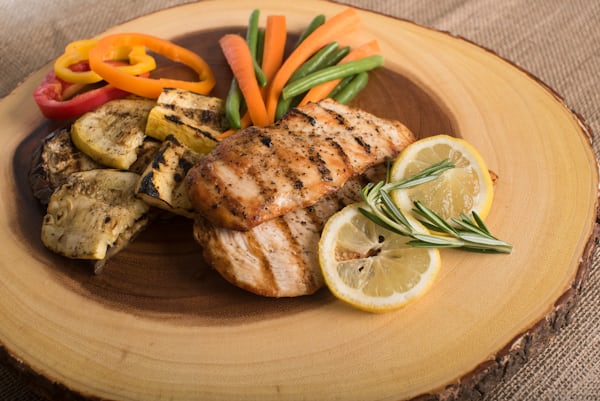
- Lemon Herb Chicken Breast: 175 cals | 35g protein | 0g carbs | 4g fat
- BBQ Shredded Chicken: 210 cals | 38g protein | 6g carbs | 4g fat
- Chicken & Brown Rice Bowl: 420 cals | 42g protein | 45g carbs | 6g fat
- Greek Chicken with Tzatziki: 310 cals | 40g protein | 8g carbs | 12g fat
Eggs
- Hard-Boiled Eggs (2): 140 cals | 12g protein | 1g carbs | 10g fat
- Baked Egg Muffins (2 muffins): 180 cals | 18g protein | 4g carbs | 10g fat
- Spinach & Feta Frittata Slice: 220 cals | 20g protein | 5g carbs | 13g fat
Legumes
- Spiced Chickpea Bowl: 380 cals | 20g protein | 55g carbs | 6g fat
- Black Bean & Quinoa Salad: 350 cals | 18g protein | 52g carbs | 7g fat
- Red Lentil Soup (300ml): 290 cals | 19g protein | 42g carbs | 4g fat
Fish
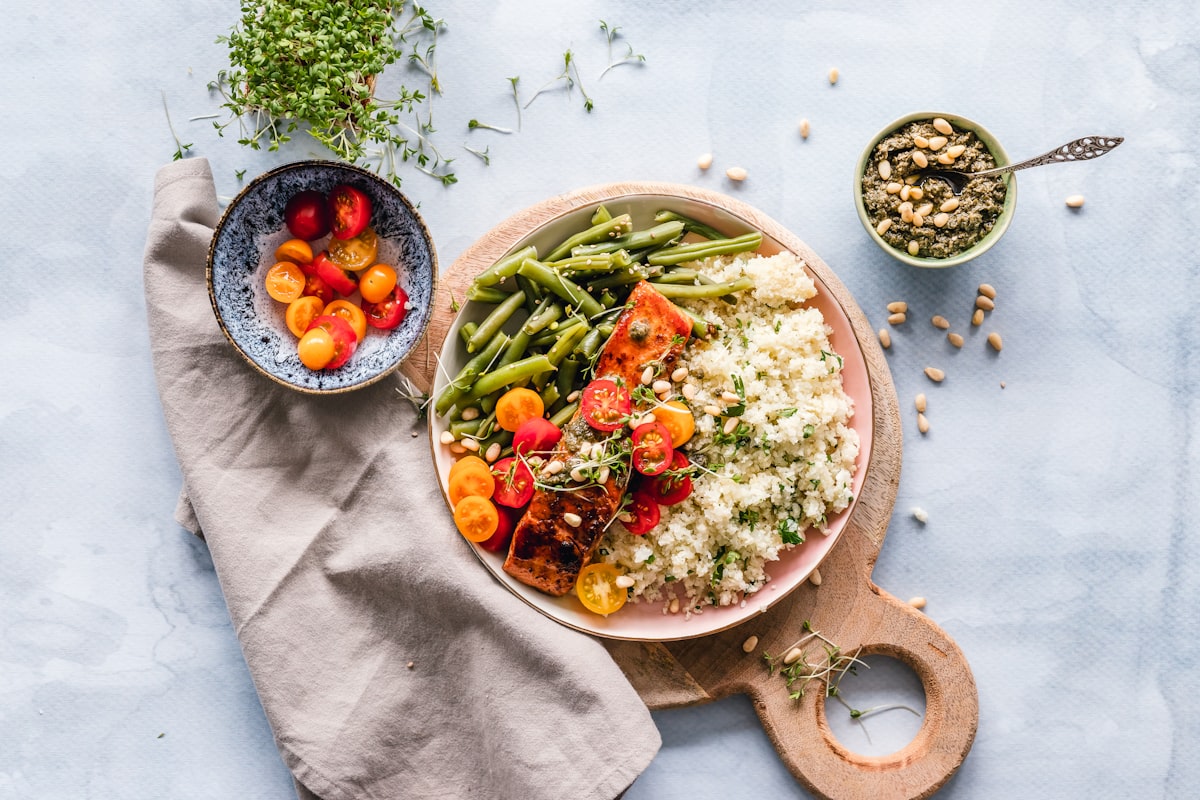
- Baked Salmon Fillet: 290 cals | 34g protein | 0g carbs | 16g fat
- Tuna & Sweet Potato Bowl: 390 cals | 38g protein | 40g carbs | 7g fat
- Smoked Mackerel Rice Bowl: 430 cals | 32g protein | 42g carbs | 14g fat
Greek Yogurt
- Greek Yogurt Parfait with Berries: 250 cals | 24g protein | 28g carbs | 4g fat
- Overnight Oats with Yogurt: 380 cals | 28g protein | 48g carbs | 8g fat
- Yogurt & Cucumber Dip (150g): 140 cals | 14g protein | 6g carbs | 5g fat
Cottage Cheese
- Cottage Cheese & Pineapple Bowl: 210 cals | 26g protein | 18g carbs | 2g fat
- Cottage Cheese Toast (2 slices): 280 cals | 28g protein | 28g carbs | 5g fat
- Cottage Cheese Stuffed Peppers: 240 cals | 24g protein | 16g carbs | 6g fat
- Vanilla Cottage Cheese Pudding: 195 cals | 22g protein | 14g carbs | 4g fat
Food Storage and Safety
The most common meal prep mistake isn't in the cooking — it's in the storage. Cooked chicken, fish, and egg dishes keep safely in the refrigerator for 3–4 days maximum. Cooked grains and legumes last 5 days. If you're prepping for a full week, freeze portions 4 and 5 on Sunday and transfer them to the fridge on Wednesday evening.
Use glass containers with airtight lids for fridge storage — they maintain food quality better than plastic and eliminate the risk of chemical leaching when microwaving. Keep raw proteins in a separate fridge drawer from cooked food. When reheating, ensure food reaches 74°C (165°F) throughout before eating. If in doubt, discard — food poisoning is not worth the saved cost of a meal.
Making It Work
Meal prep is not about perfection — it's about probability. When your fridge is stocked with five days of ready-made, high-protein meals, you make better food choices not because of willpower, but because the path of least resistance is already a good one. Start with one protein, one carb, and one vegetable this Sunday. Build the habit before building the complexity.
Aim for at least 25–35g of protein per meal across 4–5 meals per day for muscle building, or 20–30g per meal across 3–4 meals for fat loss. These 20 recipe ideas give you a rotating bank of options so the system stays sustainable for months, not just weeks. For the research behind why these foods work, read our full list of best foods for weight loss.