The gym membership cancellation, the travel schedule, the shoulder surgery recovery, the budget constraints — there are dozens of legitimate reasons people train at home. But for years, the fitness industry quietly convinced you that without a barbell and squat rack, real muscle growth was off the table. That's simply not true, and modern exercise science makes that crystal clear.
Bodyweight training, when programmed intelligently with progressive overload principles baked in, produces measurable hypertrophy, improved relative strength, and real athletic performance gains. This 30-day plan gives you the structure to make it happen.
Can You Really Build Muscle Without Weights?
The myth that bodyweight training only builds "toned" muscle — not real size — is one of fitness's most persistent pieces of misinformation. Muscle tissue doesn't know the difference between a barbell and your bodyweight. What it responds to is mechanical tension, metabolic stress, and muscle damage — three stimuli you can create just as effectively with push-ups, squats, and rows as with any piece of gym equipment.
A 2023 systematic review in the Journal of Strength and Conditioning Research found that bodyweight training at matched volume produced statistically similar hypertrophy outcomes to free-weight training over a 10-week period. The key word is "matched volume" — you need to be deliberate about progression, not just knock out the same 20 push-ups every day and wonder why nothing changes.
The 5 Core Bodyweight Movements
This entire 30-day plan is built around five foundational movement patterns. Master these and you have a complete training system for life.
1. Push (chest, shoulders, triceps)
The push-up family is the cornerstone of upper-body bodyweight training. From incline push-ups (easier) to standard push-ups to pike push-ups to archer push-ups and eventually one-arm progressions, there is an almost unlimited difficulty range to work through.
2. Squat (quads, glutes, hamstrings)
The bodyweight squat progresses through split squats, Bulgarian split squats, pause squats, and eventually pistol (single-leg) squats. This progression alone can take years to fully develop and delivers impressive quad and glute development.
3. Hinge (hamstrings, glutes, lower back)
Single-leg Romanian deadlifts, glute bridges, and Nordic hamstring curls cover the hip hinge pattern. These are the most overlooked movements in home training — and the most important for posterior chain development and injury prevention.
4. Row (back, biceps, rear delts)
You need something to pull from: a table edge, a low bar, gymnastics rings, or a suspension trainer. Inverted rows and their progressions fill the horizontal pull pattern that push-up-heavy home programs frequently neglect.
5. Core / Plank (anti-rotation, anti-extension)
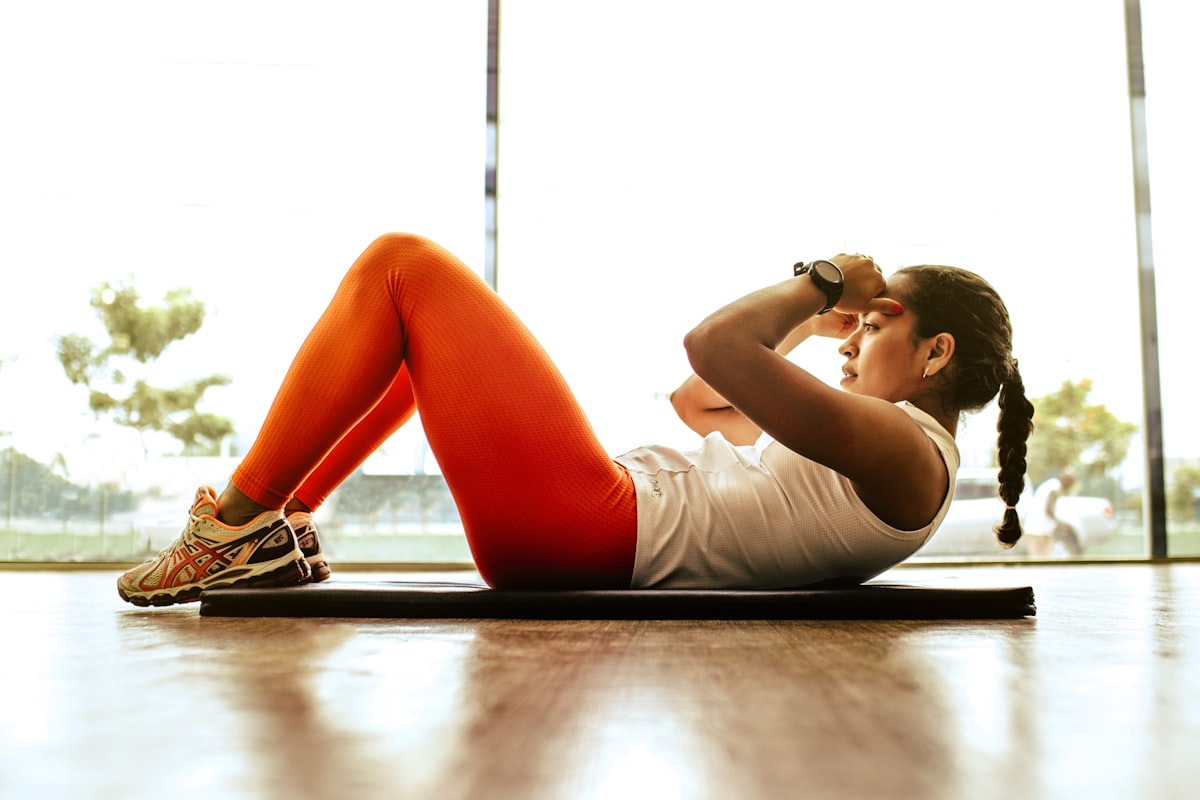
Planks, hollow body holds, dead bugs, and ab wheel rollouts build the core stiffness and stability that transfer directly to every other movement pattern.
Progressive Overload at Home
The biggest mistake in home training is treating it as maintenance rather than progression. Without increasing the demand on your muscles over time, you adapt, plateau, and stop growing. Here's how you apply progressive overload without adding weight:
- Reps: Add 1–2 reps per set each week. When you can do 4 sets of 20 push-ups, it's time to progress to a harder variation.
- Tempo: Slow the lowering (eccentric) phase to 3–4 seconds. A 3-second negative push-up is dramatically harder than a standard rep.
- Leverage: Move from two-leg to one-leg, two-arm to one-arm variations. Reducing your base of support exponentially increases demand.
- Range of motion: Push-ups on elevated surfaces allow a greater stretch at the bottom — deeper range means more time under tension.
- Rest periods: Shorten rest from 90 seconds to 60 seconds as the weeks progress to increase density.
The 30-Day Plan: Week by Week
This plan trains 5 days per week (rest on Wednesday and Sunday). Each session takes 30–40 minutes. Rest 60–90 seconds between sets.
Week 1: Foundation (Days 1–7)
Focus: Learning movement patterns, establishing baseline. Rest 90 seconds between sets.
- Push: 3 × 8 standard push-ups (or incline if needed)
- Squat: 3 × 12 bodyweight squats
- Hinge: 3 × 10 glute bridges (2-second hold at top)
- Row: 3 × 8 inverted rows (feet on floor)
- Core: 3 × 20-second plank hold
Week 2: Volume (Days 8–14)
Focus: Adding sets and reps. Rest 75 seconds between sets.
- Push: 4 × 10 push-ups
- Squat: 4 × 15 bodyweight squats OR 3 × 8 split squats per leg
- Hinge: 4 × 12 single-leg glute bridge (each leg)
- Row: 4 × 10 inverted rows
- Core: 3 × 30-second plank + 3 × 10 dead bugs
Week 3: Intensity (Days 15–21)
Focus: Harder variations and tempo. Rest 60 seconds between sets.
- Push: 4 × 8 push-ups with 3-second negative + 2 × 6 pike push-ups
- Squat: 4 × 10 Bulgarian split squats per leg
- Hinge: 3 × 10 single-leg Romanian deadlift per leg
- Row: 4 × 10 inverted rows with feet elevated
- Core: 3 × 45-second hollow body hold + 3 × 12 dead bugs
Week 4: Peak (Days 22–30)
Focus: Maximum effort, hardest variations you can manage with good form. Rest 60 seconds between sets.
- Push: 5 × 8 archer push-ups or 5 × 6 close-grip push-ups with 3-sec negative
- Squat: 5 × 8 Bulgarian split squats + 2 × 6 slow-tempo bodyweight squats as burnout
- Hinge: 4 × 8 single-leg RDL + 3 × 8 Nordic hamstring curl (if possible)
- Row: 5 × 8 feet-elevated inverted rows with 2-sec pause at top
- Core: 3 × 60-second hollow body hold + 3 × 15 dead bugs
Nutrition: What to Eat to Support Home Training
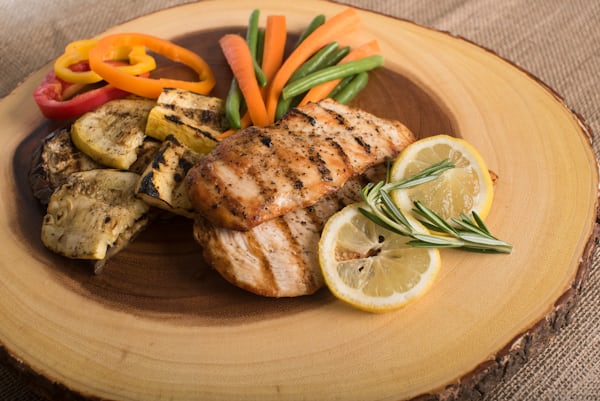
Training at home doesn't change your nutritional requirements — muscle protein synthesis demands the same raw materials regardless of where you exercised. Your two non-negotiables are total protein and sufficient calories.
- Protein: Target 1.6–2.2g per kilogram of bodyweight daily — read our full guide to daily protein needs for the science. For a 75kg person, that's 120–165g of protein. Spread across 4–5 meals for optimal muscle protein synthesis.
- Calories: Eat at maintenance or a slight surplus (200–300 calories above maintenance) if muscle building is the priority. A deficit is fine if fat loss is the goal — just expect slower strength gains.
- Carbohydrates: Don't fear carbs. Glycogen is your primary fuel for bodyweight training. Oats, rice, sweet potato, and fruit are your friends.
- Timing: Eat a meal or snack containing 20–40g of protein within 2 hours after training.
3 Most Common Home Workout Mistakes
1. Doing the same workout every day. Muscles grow during recovery, not during training. Follow the programme's rest days — they're not optional.
2. Stopping at the same rep count every week. If you're not tracking and progressively adding reps, time under tension, or switching to harder variations, you're not overloading the muscle. Plateaus are almost always a programming failure, not a biological limit.
3. Ignoring the posterior chain. Push-ups are easy to overdo. Rows, hip hinges, and rear delt work are what keep your shoulders healthy and your posture upright. Balance push volume with pull volume as closely as possible.
Key Takeaways
Gym access is a convenience, not a requirement. The 30-day plan above gives you a structured, progressive path to real muscle and strength gains using nothing but your bodyweight and a floor. The principles — progressive overload, compound movements, adequate recovery, sufficient protein — are identical to what happens in any well-run gym programme.
Complete the four weeks, track your sessions, hit your protein targets, and at the end of the month you'll have stronger fundamentals. For further progression, read about progressive overload principles and consider adding a push-pull-legs split once you're ready for more structure. and the knowledge to keep progressing far beyond 30 days. The gym isn't coming to you — so bring the training to wherever you are.