Leg day has a reputation problem. It's the session most skipped, most dreaded, and most often replaced with a second chest workout. But if you're serious about building a complete physique, improving athletic performance, and maintaining long-term joint health, you cannot afford to treat your lower body as an afterthought.
This guide breaks down the 10 best leg exercises with everything you need to actually execute them well: the muscles they target, how to perform them, the critical form cue, the most common mistake, and the optimal sets and reps for each.
Why You Shouldn't Skip Leg Day
The "skip leg day" meme exists partly because leg training is genuinely hard — and hard things are easy to avoid. But the consequences of neglecting lower-body training go far beyond aesthetics.
Your legs contain roughly 60% of your total muscle mass. Training large muscle groups with compound movements triggers the greatest acute hormonal response of any type of exercise — including significant testosterone and growth hormone release that benefits your entire body, not just your legs. Research consistently shows that athletes who train lower body compound lifts make faster gains in upper body strength too, compared to athletes who skip them.
Beyond hormones, strong legs protect your knees and hips from injury, improve posture, support lower back health, and are the single biggest contributor to metabolic rate. Skip leg day and you're leaving more than half your body's muscle-building potential on the table.
The 10 Best Leg Exercises
1. Barbell Back Squat
Muscles targeted: Quads (primary), glutes, hamstrings, core, adductors.
How to perform: Bar across upper traps, feet shoulder-width apart, toes slightly out. Brace your core and descend until your thighs are parallel to the floor (or below). Drive through your whole foot to stand.
Key form cue: "Chest up, knees out" — think of pushing your knees outward toward your little toes throughout the descent.
Common mistake: Allowing the heels to rise. If this happens, raise them on plates or work on ankle mobility.
Sets/reps: 4 × 4–6 for strength; 4 × 8–10 for hypertrophy. Rest 2–3 minutes.
2. Romanian Deadlift
Muscles targeted: Hamstrings (primary), glutes, erector spinae.
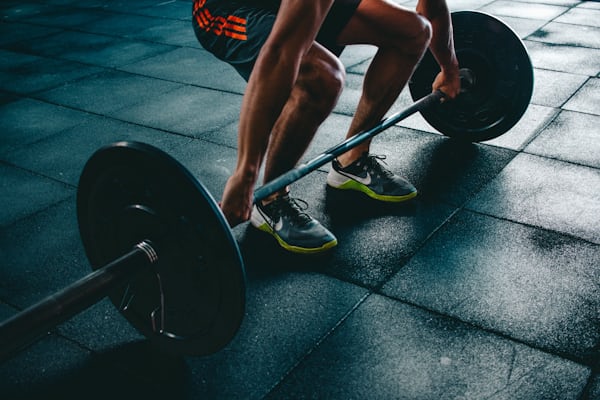
How to perform: Hold barbell at hip height, feet hip-width. Hinge at the hips, pushing them back while keeping the bar close to your legs. Lower until you feel a strong hamstring stretch (usually mid-shin), then drive hips forward to return.
Key form cue: "Hinge, don't squat" — the knees barely bend. All movement comes from the hips.
Common mistake: Rounding the lower back. Maintain a neutral spine throughout. Load is secondary to form on this exercise.
Sets/reps: 3–4 × 8–12. Rest 90 seconds.
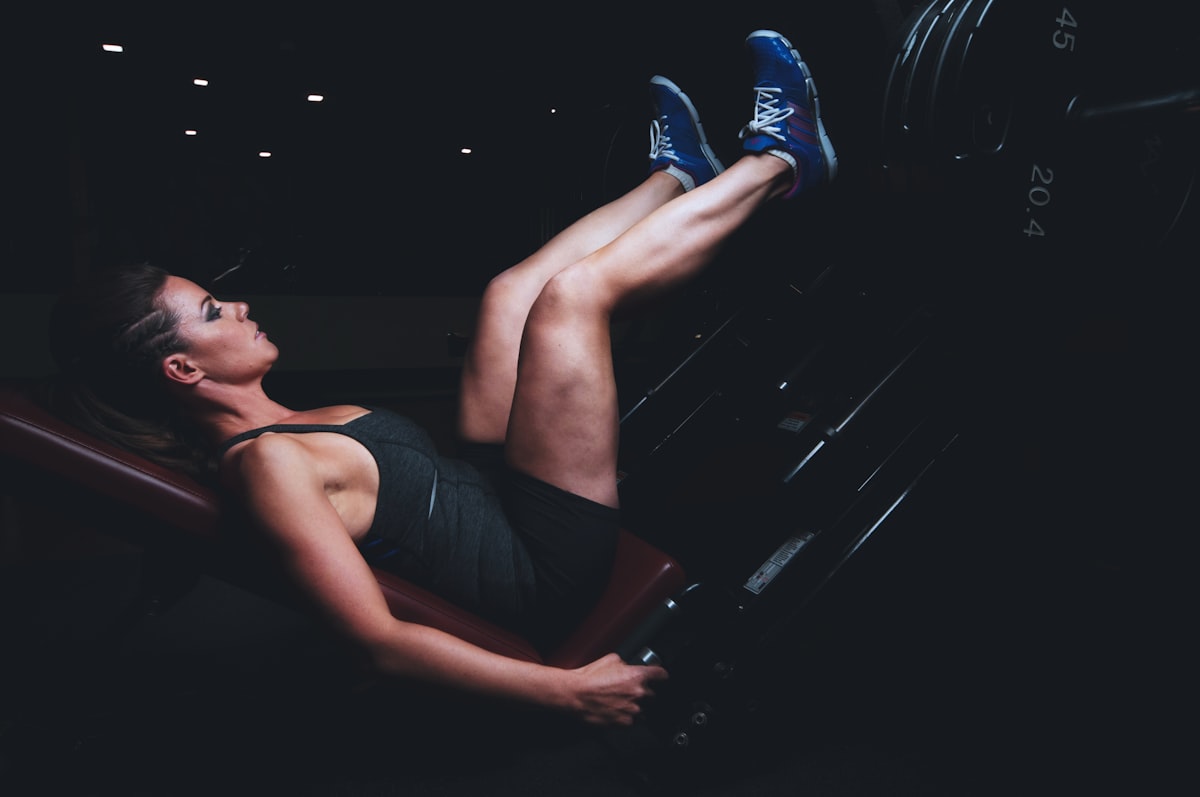
3. Leg Press
Muscles targeted: Quads (primary), glutes, hamstrings depending on foot position.
How to perform: Feet shoulder-width on the platform, toes slightly out. Lower the sled until knees form a 90-degree angle, then press back to near-full extension (don't lock out).
Key form cue: Keep your lower back pressed against the seat throughout. The moment it rounds, the load has become too heavy.
Common mistake: Placing feet too low and turning it into a quad isolation with knee strain. Mid-platform foot position distributes load more safely.
Sets/reps: 3–4 × 10–15. Rest 90 seconds. Excellent as a volume finisher after squats.
4. Bulgarian Split Squat
Muscles targeted: Quads, glutes (primary), hip flexors, hamstrings.
How to perform: Rear foot elevated on a bench, front foot stepped out far enough that your shin stays near-vertical in the bottom position. Descend until rear knee nearly touches the floor.
Key form cue: Front knee tracks over the second toe — don't let it collapse inward.
Common mistake: Front foot too close to the bench, causing forward knee travel and knee pain. Step out further.
Sets/reps: 3 × 8–10 per leg. Rest 90 seconds. Holds dumbells or barbell are both effective.
5. Hack Squat
Muscles targeted: Quads (strong emphasis on vastus medialis — the teardrop muscle).
How to perform: On the hack squat machine, feet shoulder-width on the platform. Lower the carriage until thighs are parallel, keeping lower back flat against the pad.
Key form cue: Feet placement determines emphasis — lower feet placement increases quad recruitment; higher placement shifts load to glutes and hamstrings.
Common mistake: Not going deep enough. Shallow reps dramatically reduce quad activation. Aim for a 90-degree knee angle as minimum.
Sets/reps: 3–4 × 10–12. Rest 90 seconds.
6. Leg Curl
Muscles targeted: Hamstrings (biceps femoris, semitendinosus, semimembranosus).
How to perform: Lying leg curl: face down on the pad, ankles under the roller. Curl the weight toward your glutes through a full range of motion. Pause at peak contraction.
Key form cue: Keep your hips pressed into the pad throughout. Hips rising means you're compensating with your lower back.
Common mistake: Using too much weight and losing range of motion. Hamstrings respond better to stretch-loaded, full-range reps than heavy partial reps.
Sets/reps: 3 × 10–15. Rest 60–90 seconds.
7. Leg Extension
Muscles targeted: Quadriceps (all four heads — vastus lateralis, medialis, intermedius, and rectus femoris).
How to perform: Seated with pad just above the ankles. Extend to full knee extension, hold for 1 second, then control the descent.
Key form cue: Toes pointed slightly inward to better activate the outer quad (vastus lateralis).
Common mistake: Using this as a primary quad exercise and skipping squats. The leg extension is an isolation finisher — it should follow compound movements, not replace them.
Sets/reps: 3 × 12–15. Rest 60 seconds. Excellent for pre-exhaustion or finishing sets.
8. Walking Lunge
Muscles targeted: Quads, glutes, hamstrings, hip flexors, core (balance).
How to perform: Step forward, lower the rear knee toward the floor, then drive forward with the front foot to step the back foot through to a new stride. Continue walking.
Key form cue: Keep your torso upright throughout. A forward lean shifts load to the lower back rather than the working leg muscles.
Common mistake: Short strides that result in excessive knee-over-toe stress. Take long steps and think "down and up" rather than "forward."
Sets/reps: 3 × 12–16 steps (each leg). Use dumbbells or a barbell for loading.
9. Step-Up
Muscles targeted: Glutes (primary), quads, hamstrings.
How to perform: Step onto a bench or box with one foot. Drive through the heel of the elevated foot to stand tall on the box. Lower the trailing leg back to the floor with control.
Key form cue: Drive through the heel of the working leg, not the toes. This shifts emphasis to the glutes rather than the quads.
Common mistake: Pushing off the back foot to assist the movement. The back foot should be passive — all work comes from the front leg.
Sets/reps: 3 × 10–12 per leg. Hold dumbbells for added resistance.
10. Standing Calf Raise
Muscles targeted: Gastrocnemius (upper calf), soleus (lower calf).
How to perform: Stand on the edge of a step or plate, heels hanging off. Lower heels below the step for a full stretch, then rise onto tiptoes as high as possible. Hold the peak contraction for 1–2 seconds.
Key form cue: Full range of motion is non-negotiable. The calf muscles are extremely adaptable and respond poorly to partial-range, high-rep work. Go deep on the stretch.
Common mistake: Treating calf training as an afterthought. Calves are notoriously stubborn; they need the same progressive overload, volume, and effort as any other muscle group.
Sets/reps: 4 × 15–20. Rest 60 seconds. Use slow eccentrics (3 seconds down) for enhanced stretch stimulus.
How to Structure a Complete Leg Day
A well-structured leg day follows a logical order: heavy compound first (when you're fresh), followed by targeted isolation work. Here's a practical A/B leg day split:
Leg Day A (Quad Focus): Barbell Back Squat 4×6 → Leg Press 3×12 → Leg Extension 3×15 → Walking Lunge 3×12 → Standing Calf Raise 4×15
Leg Day B (Posterior Chain Focus): Romanian Deadlift 4×8 → Bulgarian Split Squat 3×10 → Hack Squat 3×10 → Leg Curl 3×12 → Step-Up 3×10 → Standing Calf Raise 4×15
Alternate between Leg Day A and Leg Day B throughout the week, with at least 48–72 hours between sessions to allow adequate workout recovery.
Recovery Tips for Legs
The large muscle groups of the lower body produce significant DOMS (delayed onset muscle soreness) — especially after squats, lunges, and any eccentric-heavy movement. The WHO physical activity guidelines recommend muscle-strengthening activities at least twice per week for all adults. Expect soreness 24–48 hours after a hard leg session; this is normal and not a sign of injury.
- Frequency: Train legs 2× per week for optimal hypertrophy. More than 3× risks insufficient recovery for most people.
- Active recovery: Light walking, cycling, or foam rolling 24–36 hours after a hard leg session helps blood flow and reduces soreness duration.
- Protein and sleep: Leg muscles require the same repair resources as upper body muscles. Hit your daily protein target and prioritise 7–9 hours of sleep for full recovery.
The Bottom Line
Your lower body is home to your most powerful and metabolically significant muscles. Training them hard and consistently — with the right exercises in the right order at the right intensity — is one of the highest-return investments you can make in your training.
Build your leg workouts around the squat and Romanian deadlift as anchors, add volume with the leg press, Bulgarian split squat, and isolation work, and structure your A/B split to hit both quad-dominant and posterior chain movements across your training week. Stay consistent, progress the loads, and your legs will follow.